


Residential · 11 June 2026
Manchester's Luxury Living Market Comes of Age
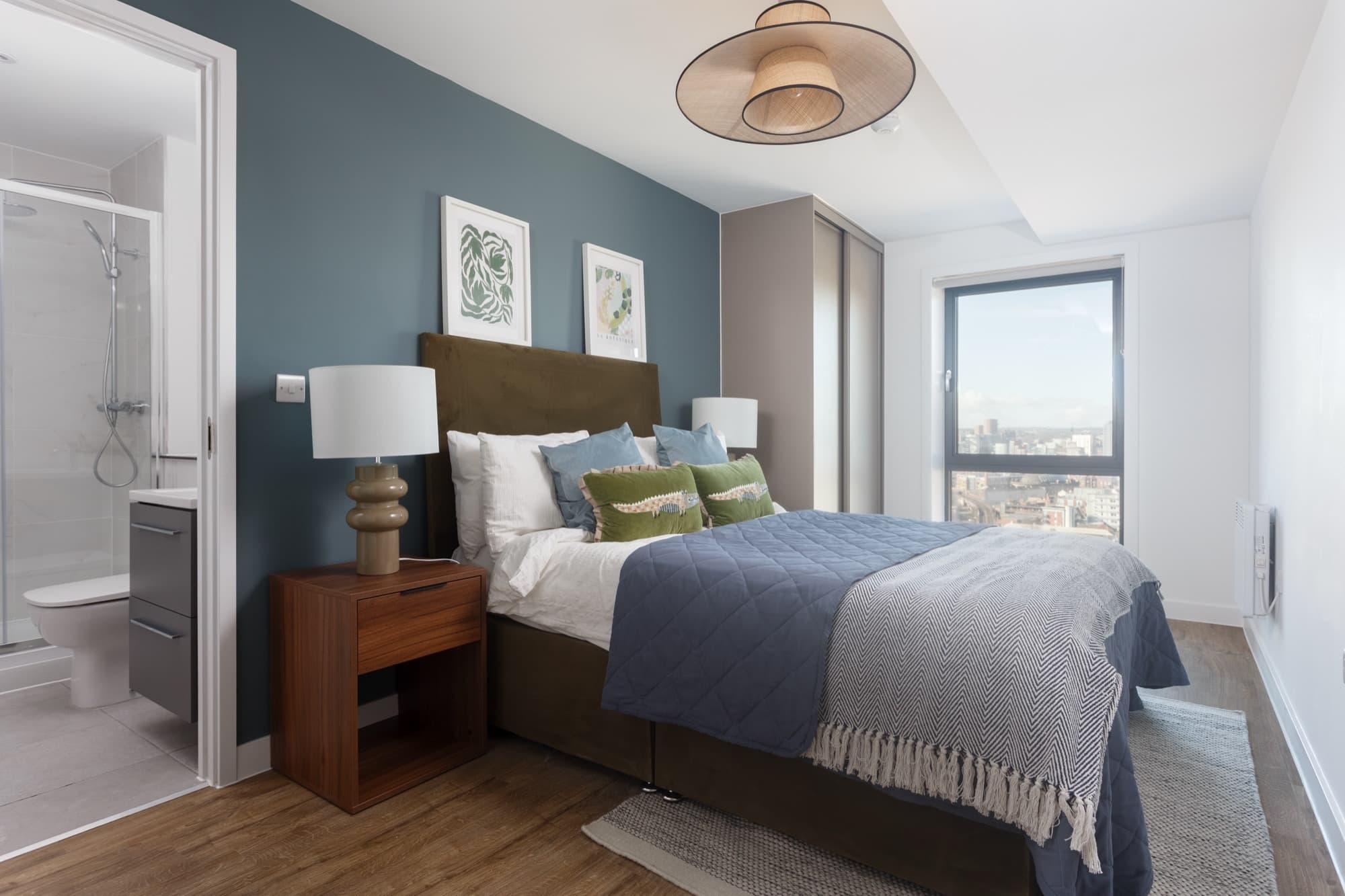
For decades, luxury residential in the UK meant one thing: London postcodes. Knightsbridge, Mayfair, the odd riverside tower. What is happening in Manchester right now is the first serious challenge to that monopoly, not a marketing claim, but a structural shift backed by some of the most striking economic numbers any UK city has produced this century.
The economy underneath the towers
Start with the fundamentals, because luxury markets are always a derivative of local wealth. Census data shows Manchester's GDP per capita rose 44 percent over the last Census period, from 35,739 pounds to 51,330 pounds, the largest increase recorded by any major UK city. In April 2026, analysis by Deloitte confirmed that Greater Manchester's economy had passed the 100 billion pound mark for the first time. Since 2015 the city's economy has grown by 28 percent, consistently ahead of the UK average.
The business base tells the same story. The number of businesses operating in the city has climbed from around 17,000 to 23,500, and employment has risen from roughly 350,000 to 426,000 people. This is not a city renting prosperity from a single industry; it is a broad-based expansion across tech, media, finance, life sciences and professional services, exactly the employment mix that creates demand for premium homes.
And the people keep coming. Manchester City Council projects the city centre population will reach 630,000 by 2030. Every one of those residents needs somewhere to live, and a growing share of them, senior professionals, founders, returning expats, international buyers, want somewhere considerably better than the standard city-centre flat.
What luxury actually looks like in Manchester now
The current generation of Manchester developments would have been unthinkable in the city ten years ago. Residents' swimming pools, full gyms and spas, rooftop gardens, private dining rooms and 24-hour concierge services have moved from novelty to baseline expectation at the top of the market. Developers are no longer asking whether Manchester buyers will pay for amenities; they are competing on whose amenities are best.
Three schemes illustrate how far the market has travelled.
- • W Residences at St. Michael's brings the first regional branded residences in the UK to Manchester, a model previously confined to London and the world's gateway cities, where a global hospitality brand puts its name, standards and service culture on a residential address.
- • Nobu Manchester pairs a 160-bedroom hotel with more than 450 branded residences in what will be the tallest tower in the UK outside London. The significance is not just the height; it is that an international luxury brand chose Manchester for a flagship of this scale.
- • Waterhouse Gardens, recently completed on the former Boddingtons brewery site, shows the regeneration formula at work, industrial heritage land converted into high-specification city living at a scale individual London sites rarely allow.
Branded residences matter beyond their own walls. When operators of this calibre commit to a city, they reset price ceilings, import international buyers and validate the entire premium tier beneath them. That re-rating effect is now visibly underway in Manchester.
The value gap is the opportunity
Here is the part investors should sit with. Manchester now offers genuinely world-class residential product, branded, amenitised, concierge-serviced, at prices that remain dramatically below London equivalents. A buyer gets the lifestyle of a prime London tower for a fraction of the capital outlay, in a city whose economy is growing faster than the capital's.
Meanwhile, the supply side is tightening. Demand for premium city-centre homes is rising on every measure, population, wealth, employment, while construction starts have slowed, squeezed by build costs and financing conditions. Rising structural demand meeting constrained future supply is the most reliable setup in residential investment, and it is precisely the configuration Manchester's luxury segment presents in 2026.
There is also a depth-of-market argument. Luxury stock in Manchester is still scarce relative to the size of the wealth base now living and working there. In London, a premium apartment competes with thousands of comparable units. In Manchester, the competitive set at the true top end remains small, which supports both rents and resale values for early owners.
A market that has stopped apologising
The most telling change in Manchester is cultural. The city's developers, agents and buyers no longer frame the premium market as London-but-cheaper. Manchester's top end now has its own identity: globally branded, architecturally ambitious and priced off its own fundamentals. With the economy through 100 billion pounds, the fastest wealth growth of any major UK city and a city-centre population heading for 630,000, those fundamentals are doing the persuading on their own.
For investors, the window is the gap between what Manchester has become and what its prices still assume. That gap will not stay open indefinitely.
Silkwood Group helps UK and international investors access residential developments in Manchester and the UK's other fast-growing regional cities, including premium city-centre schemes. If Manchester's top end is on your radar, talk to our team about what is available now.
Want this kind of insight applied to your own plans? Book a call or view current developments.